 Team
Team Youth baseball fielding drills don’t require an hour on the field to be effective. Seven targeted youth baseball fielding drills can be completed in just 20 minutes, building footwork, range, and game-ready reactions while respecting your team’s tight schedule. This time-efficient approach keeps young players engaged, prevents fatigue-related errors, and gives every athlete meaningful reps at their position.
- Total time needed: 20 minutes for all 7 drills combined
- Best for: Travel baseball teams and competitive youth programs
- Skill focus: Ground balls, fly balls, footwork, transitions, throwing accuracy
- Equipment: Standard baseballs, gloves, cones, bucket of balls
- Age groups: Drills scale from 8U through 18U with minor modifications
Why 20-Minute Fielding Sessions Work for Competitive Youth Baseball
Coaches at Team Gorillas and other competitive youth travel baseball programs know that quality beats quantity. A 20-minute fielding session with clear structure, high repetition, and immediate feedback produces sharper defenders than a scattered 90-minute practice. Young players ages 8-18 retain information better when drills move quickly and have a defined purpose.
Short sessions also prevent boredom and injury. Standing in the outfield waiting for a ball teaches nothing. Constant action with immediate game-like scenarios keeps every athlete focused and builds muscle memory through volume and variety in a compressed timeframe.
For travel baseball teams juggling tournaments, school sports, and other commitments, a focused 20-minute fielding block can be plugged into a longer practice or run as a standalone skill session before games. Time efficiency doesn’t mean cutting corners, it means designing every repetition to matter.
Join Team Gorillas
Discover competitive youth baseball training designed to develop champions.
Drill 1: Ground Ball Reaction (3 Minutes)
Start with footwork and reaction speed, the foundation of all defensive play. Position infielders in a line about 15 feet apart. A coach stands 30 feet away with a bucket of balls and a fungo bat (or throws softly underhanded for younger players). Hit or throw a ground ball to each player one at a time.
Key coaching points:
- First step is forward and to the side (no backpedal)
- Eyes stay on the ball through the glove
- Chest stays low; stay “on the balls of your feet”
- Field the ball out in front of the body, not at the feet
Rotate players so each takes 6-8 reps in 3 minutes. Focus on clean fielding, not throws. Emphasize rhythm: ball hit, first explosive step, glove down, chest through the ball. This drill builds confidence and reaction time. For younger players (8U–10U), slow your tempo and use softer balls.
Drill 2: Double-Play Footwork (3 Minutes)
Shortstops and second basemen need quick transitions. Set up two cones about 15 feet apart to represent the bases. Place a ball on the ground between the cones. Players work in pairs: one plays short, one plays second.
The short-side player fields a mock ground ball (using a soft toss or rolling ball), steps on the imaginary bag, pivots open or closed (depending on throw angle), and tosses to the second baseman at the bag. The second baseman catches it, steps through, and makes a strong throw to first (or a cone representing first base). Complete 4-5 reps each, then swap positions.
Timing and footwork prevent injuries and double plays. Emphasize:
- Soft hands receiving the toss
- Quick, small steps, no big gallops
- Eyes stay up to locate the runner
- Throw over the shoulder, not sidearm (unless game situation demands it)
Drill 3: Gap Defense (3 Minutes)
Position three outfielders in a triangle formation about 40 feet apart. Designate a coach or feeder in the middle (or a side angle). Throw soft fly balls or line drives to the gaps between each pair of outfielders. The closest player calls it and communicates with the other two.
This drill builds situational awareness and communication, two hallmarks of competitive teams. Each outfielder should take 4-5 reps. Emphasize footwork to the ball, crossover steps, not side-shuffles, and calling “mine” or “got it” clearly.
For 8U–12U, use softer toss and closer distances. For 13U and up, increase speed and depth. The goal is clean catches and confident communication, not spectacular diving plays.
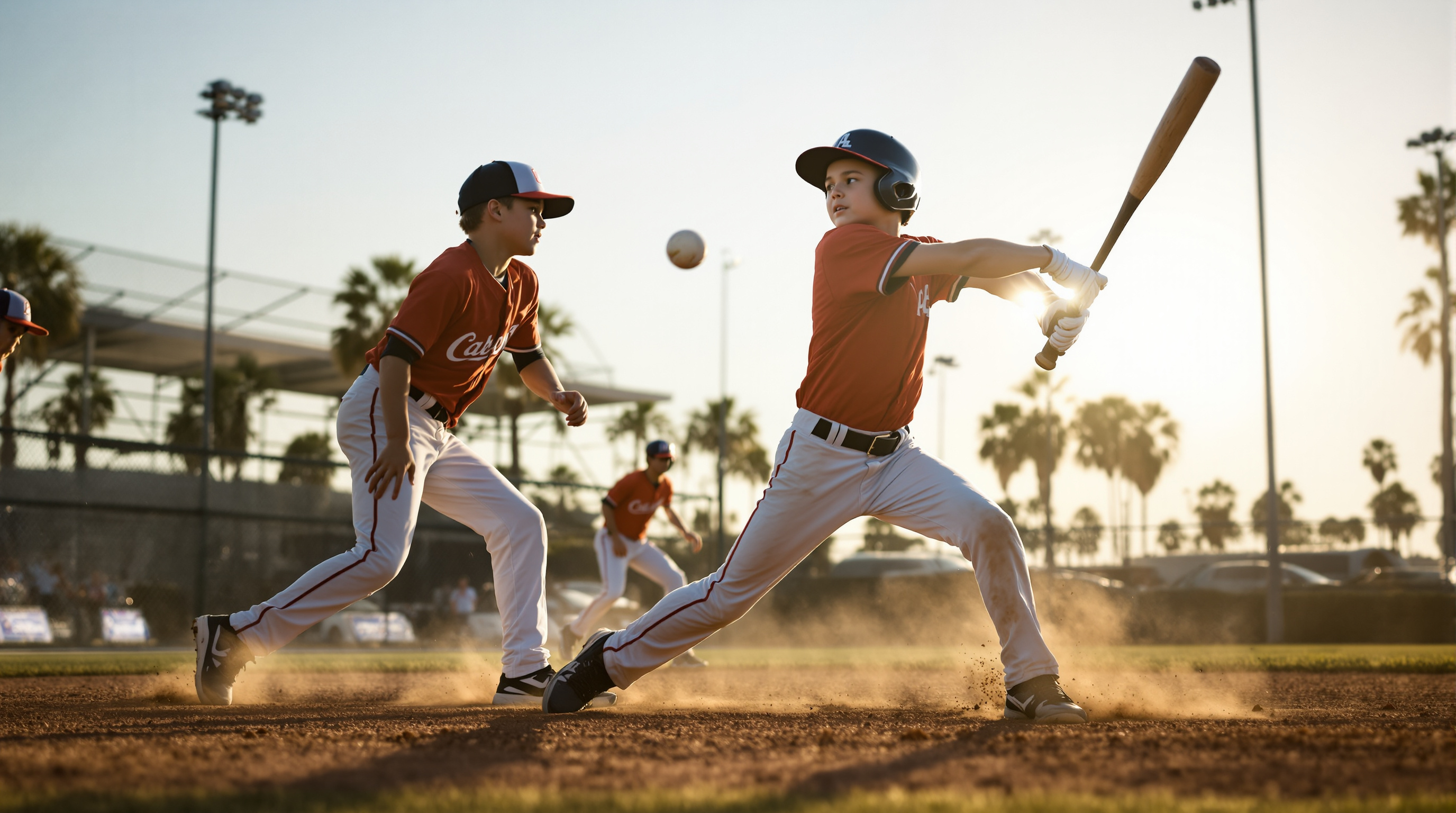
Drill 4: Crow Hop and Throws (2 Minutes)
Arm strength and footwork matter equally in the outfield. Have each outfielder stand about 90 feet from a target (a catcher, first baseman, or a cone). Players take a fly ball toss from a coach nearby. After catching, they execute a crow hop (right foot to left foot if throwing right-handed) and throw to the target with accuracy.
Four reps per player, two throws: one to second base and one to home. This drill bridges catching and throwing in one compact movement, mimicking a relay or cutoff in a game. Young players learn that catching is only half the job; the throw matters just as much.
Drill 5: Short-Hop Fielding (2 Minutes)
Infielders, especially first and third basemen, face short-hopping ground balls constantly. Pair players up, about 25 feet apart. One partner soft-tosses ground balls so they bounce just in front of the fielder (a true short-hop). The fielder stays down, absorbs the bounce with soft hands, and makes a quick, accurate throw back.
Six reps per player in pairs. The emphasis is glove depth, hand action, and soft hands to deaden the ball. This drill prevents bad-hop errors and builds confidence against wild infield hops.
Drill 6: Cutoff and Relay Timing (3 Minutes)
Set up three bases: home, second, and a mock outfield base (or use a cone). One outfielder is 150 feet away. A base runner is at first. A coach hits a ball to the outfielder (or uses a controlled toss). The outfielder fields, finds the relay man (shortstop or second baseman), who then relays to the base covering (third or home).
Two reps per outfielder. This high-level drill teaches communication, proper relay depth, and cutoff positioning. Relay men learn to get in line with the throw, catch it cleanly, and transition quickly. For younger players, simplify by eliminating the runner and focusing only on clean feeds and catches.
Drill 7: Mixed Ground-and-Fly Sequence (3 Minutes)
End with a game-scenario drill. Arrange infielders and outfielders in their natural positions. A coach calls out situation: “Bases loaded, one out” or “Runners on first and third, two outs.” Then hit or throw a series of ground balls, fly balls, and line drives in quick succession, five balls in 3 minutes.
Players must react to the live ball and get into proper position, field cleanly, and make the play call. No throwing needed, just positioning, footwork, and decision-making. This drill keeps all nine players engaged, simulates game pressure, and reinforces the habits built in the previous six drills.
Sample 20-Minute Drill Schedule
| Drill | Duration | Focus | Players |
|---|---|---|---|
| 1. Ground Ball Reaction | 3 min | Footwork, reaction | Infielders |
| 2. Double-Play Footwork | 3 min | Transitions, throws | IF (SS/2B) |
| 3. Gap Defense | 3 min | Communication, reads | Outfielders |
| 4. Crow Hop and Throws | 2 min | Arm strength, footwork | Outfielders |
| 5. Short-Hop Fielding | 2 min | Soft hands, transitions | Infielders (IF) |
| 6. Cutoff and Relay | 3 min | Positioning, teamwork | IF + OF |
| 7. Mixed Sequence | 3 min | Game awareness, calls | All nine |
| Total | 20 min | All positions, all skills | |
Scaling Youth Baseball Fielding Drills by Age Group
The seven drills above work across age groups, but adjustments make them age-appropriate and injury-smart.
Ages 8–10U (Recreational and Competitive Intro)
Use softer balls, slower tosses, and closer distances. Focus on glove depth, foot positioning, and positive reinforcement. Reduce complexity in cutoff and relay drills; emphasize basics of catching and first-step quickness.
Ages 11–13U (Travel Ball Foundation)
Increase throwing distance and tempo. Introduce double-play footwork with proper mechanics. Add communication drills (gap defense calling). Keep reps high and keep corrections short.
Ages 14–18U (Advanced Travel/Elite Programs)
Game-speed tempo, longer throws, and complex scenarios. Introduce advanced relay positioning, bunt-coverage assignments, and cutoff depth adjustments. Competitive mindset drills (error recovery) matter.
Equipment and Space You’ll Need
A well-organized 20-minute fielding session requires minimal setup:
12–15 regulation baseballs (or softer safety balls for 8U–10U). Keep a bucket handy for quick transitions between drills.
Each player brings a fitted glove. No special protection needed beyond standard baseball helmets for running drills.
Four to six cones mark bases, relay points, and gaps. Keeps setup fast and drills organized.
A fungo allows precise control of ground balls. Soft toss works fine if you don’t have one.
One infield diamond (60 feet for 8U–12U, 90 feet for 13U and up) plus open outfield space is ideal. If you’re short on space, run drills in sequence at the same location rather than simultaneously.
In San Diego, most travel baseball teams practice at fields in Mission Valley, Pacific Beach, or Clairemont Mesa parks. A standard park diamond supports all seven drills without conflict.
Coaching Tips to Maximize Results in 20 Minutes
Pre-drill setup. Spend 2 minutes positioning cones, gathering balls, and assigning roles. Mark a clipboard with which drills pair infielders and outfielders. A disorganized 5-minute setup wastes a third of your time.
Minimize talking. Demo each drill once (30 seconds). Trust young players to remember. Long explanations eat time. Corrections stay brief, one or two coaching cues, then reps.
Keep the energy high. Move between stations. Use a whistle or call to signal transitions. Positive language (“Great footwork!” rather than “You’re too slow”) keeps players engaged.
Track weakness. If a whole position group struggles with one skill, add that drill to your next session. If one player needs extra help, assign a peer mentor or spend one-on-one time outside formal practice.
Make it competitive. Challenge infielders to make zero errors in the mixed sequence. Award a point for each clean relay. Friendly competition sharpens focus and mirrors game pressure.
Integrating 20-Minute Drills Into Your Practice Schedule
A 20-minute fielding block fits many practice formats. Here are two common structures:
Pre-game warm-up (30 minutes before game time): Run Drills 1, 3, 4, and 7 only (11 minutes). Keeps players sharp and muscles warm. Skip complex double-play and cutoff work; save energy for the game.
Standalone skill session (no hitting, no base running): Run all seven drills as written. Ideal for a Tuesday or Thursday evening when you want to focus on defense and build confidence before tournament weekends.
Part of a 90-minute practice: Use this 20-minute block as your first segment after warm-up. Players are fresh and mentally sharp. Follow with batting drills or situational play.
The youth baseball tryout checklist for coaches emphasizes defensive fundamentals as a core evaluation criterion. Running consistent, high-rep fielding drills builds the skills that scouts and coaches look for at tryouts.
Common Mistakes Coaches Make in Short Fielding Sessions
Too much standing around. Long lines and lots of waiting kill focus. Pair players up and rotate fast. Every kid should touch a ball every 20–30 seconds, not every 2 minutes.
Unclear expectations. Don’t assume players know what “good footwork” means. Demo it. Point it out. Use language they understand: “Step toward the ball first, then glove down” beats “Aggressive first-step lateral movement.”
Skipping younger age groups. All positions should run all drills (with age-appropriate adjustments). Outfielders need gap communication and ground-ball reaction. Infielders need crow-hop throws. Mixed drills teach the full game.
Inconsistent drill structure. If you run the same seven drills every week, players know what to expect and focus faster. Consistency builds ownership and effort. Change drills monthly, not daily.
No feedback loop. End your 20-minute session with one sentence: “This week we’re sharp on ground balls. Next week we’ll focus on relay timing.” Players need to know what they did well and what’s next. That clarity sustains effort.
Measuring Progress Over Time
After running these seven youth baseball fielding drills for four weeks, track improvement in two ways:
Quantitative: Count errors in the mixed sequence (Drill 7) each week. Aim for a 10–15% reduction in errors by week four. Track throw accuracy in the cutoff drill; aim for 90%+ on-target throws by mid-season.
Qualitative: Observe footwork speed, communication volume (players calling “mine” and “got it”), and confidence. Do players play faster, more instinctively? Do they recover from errors faster? These habits predict tournament success.
Video your team’s first live game and your third tournament game. Compare defensive positioning and reaction time. The habits formed in focused 20-minute sessions show up in game film within 3–4 weeks.
Why Coaches Prefer Short, Structured Fielding Sessions
Competitive youth travel baseball coaches favor concentrated, well-designed drills over long, loose practice time. A focused 20-minute block with seven different skills touches every position, builds muscle memory, and keeps young players mentally engaged. Fatigue, boredom, and poor focus rarely sabotage a short, goal-driven session.
Whether you’re coaching 8U intro-to-competitive teams or 18U elite travel rosters, these drills scale and adapt. Start with Drills 1, 3, and 7. Master them. Add Drills 2, 4, and 5 once your team’s footwork sharpens. Build to all seven by mid-season.
The result: confident defenders, fewer errors, and a team that plays clean baseball when the tournament stakes get high.
Ready to Get Started?
Build championship-level fielding skills with Team Gorillas.
FAQ
Can I run these youth baseball fielding drills with just one coach?
What’s the minimum number of players needed to run all seven youth baseball fielding drills?
How often should a competitive youth travel baseball team run these fielding drills?
Are these youth baseball fielding drills suitable for 8U players?
Can I combine these fieldwork drills with hitting in one 60-minute practice?